Did you know that entire schools were evacuated from London to Oxted during the Second World War and Limpsfield Common was used for tank training exercises ahead of the D-Day landings?
When war loomed in 1939, thousands of children were evacuated from cities to the relative safety of the countryside—a moment etched in the memory of a generation. For Anthony Collins and Ken Clark, the first of September marked the beginning of a journey that would take them from south London to the quiet lanes of Oxted and Limpsfield in Surrey. Unlike the often-portrayed tearful toddlers with name tags, Ken and Anthony were part of the lesser-remembered wave of older schoolchildren—independent, observant, and full of curiosity.
In the run up to VE Day, 8 May and Surrey Day on 10 May, we’ll be running some fascinating accounts that depict life in wartime Oxted & Limpsfield… We hope you enjoy them.
The first is an excerpt is from a letter written by Aske’s School evacuee Anthony Collins to Dawn Jageurs, owner of Chartlands in Icehouse Wood (then known as Binefield House), which accommodated evacuee school children during the war… The letter recounts a bomb incident, highlighting the dangers faced during their education.
During the war, Chartlands in Icehouse Wood was used to house boys evacuated from Aske’s Boys School in New Cross (Haberdashers’). Lessons took place at the Barn Theatre, Oxted School, and several large houses in Limpsfield, including Ballards Shaw and Champions.
Ironically, before the end of the war, the children were relocated again—this time to Teignmouth in Devon—after Oxted became too dangerous due to the threat of V-1 flying bombs.
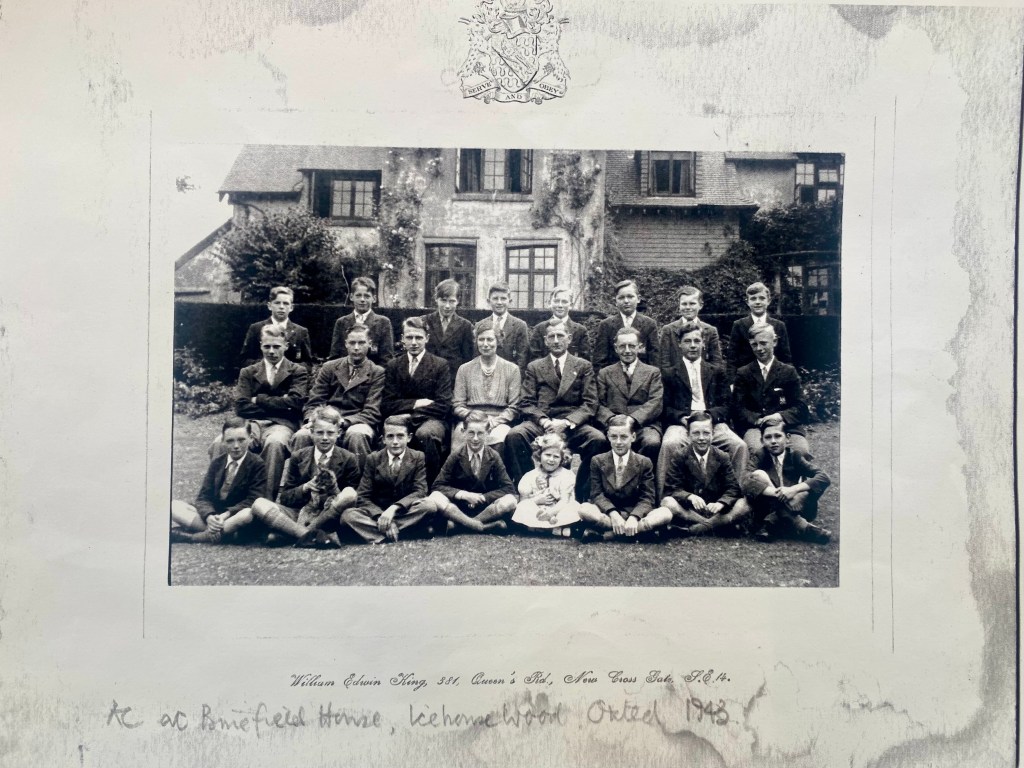
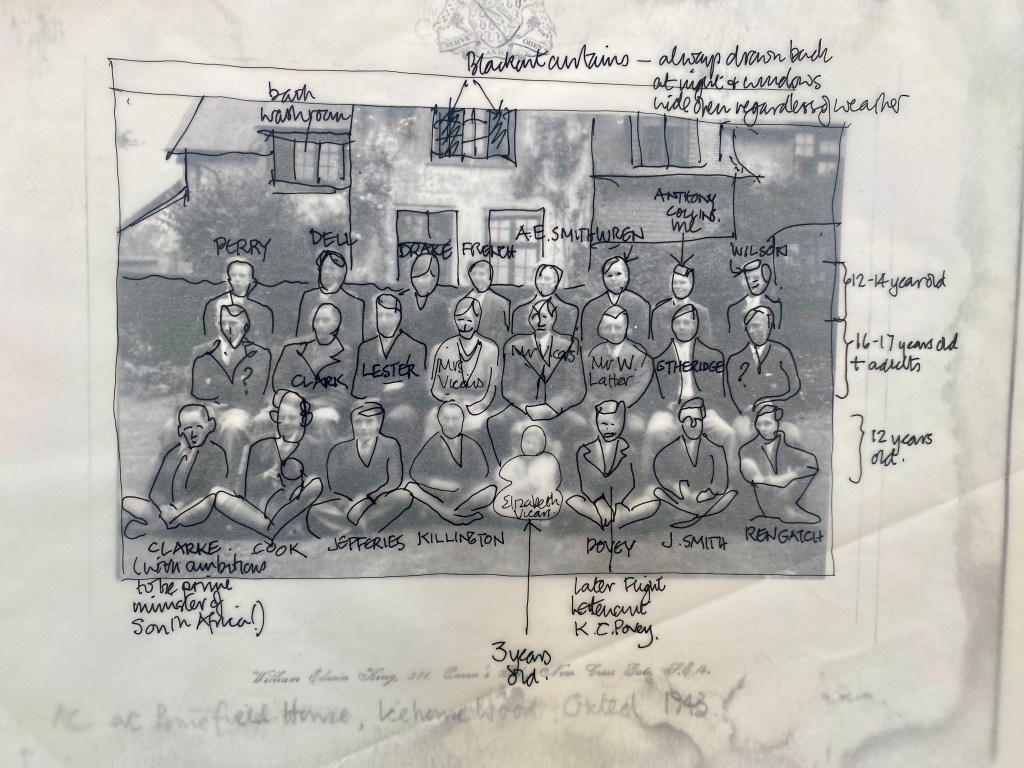
“….Some of the VI bombs fell within ¼ mile of Binefield House, the most dramatic occurring during the early evening one day, when we were doing our prep in the top room. One of the boys – Wilson (in photo) – was leaning out of the window when he suddenly turned and shouted “Lay Flat”! …. I did not really appreciate his urgency, and the next event was the window falling onto the table at which I was working, but with no ill effects on me.
There were two types of V-1 bomb, one which dropped vertically once the engine had stopped and another with longer wings which glide some distance once the power was cut off. IT was sone of the latter types which exploded on this occasion and therefore came unannounced by any engine noise. According to Wilson, it was coming straight at us when he shouted his warning. Fortunately, one if its wings must have brushed against the top of one of the elm trees which stood on the land to the south of the house, causing the bomb to turn and explode by the side of the footpath leading from the Mill to Old Oxted.
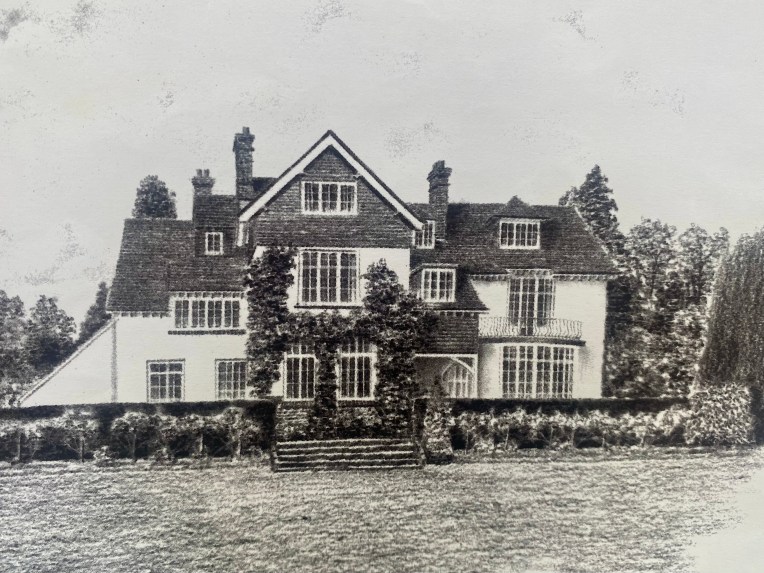
Oxted and Limpsfield accommodated the education of about 250 children from our school (Aske’s). We made use of the Barn Theatre as a classroom. It was very cold in winter! We shared Oxted County School with local children, and we also had classrooms in a large house in Ballards Lane – Ballards Shaw.
In the summer of 1943, all the teaching was transferred to a very large house called Champions on Limpsfield Chart…It took about ¾ hour to walk from Binefield to Champions, or about 20 minutes cycling.
The roads were almost empty of traffic. The only vehicles being the occasional bus or army lorry. During the spring of 1944, Limpsfield Common was used as a tank training area in preparation for the D-Day Landings. You may find it hard to believe that the only plants remaining after the activities of the tanks were the stouter specimens of trees. Surprisingly the Common recovered within 3-4 years! AC”
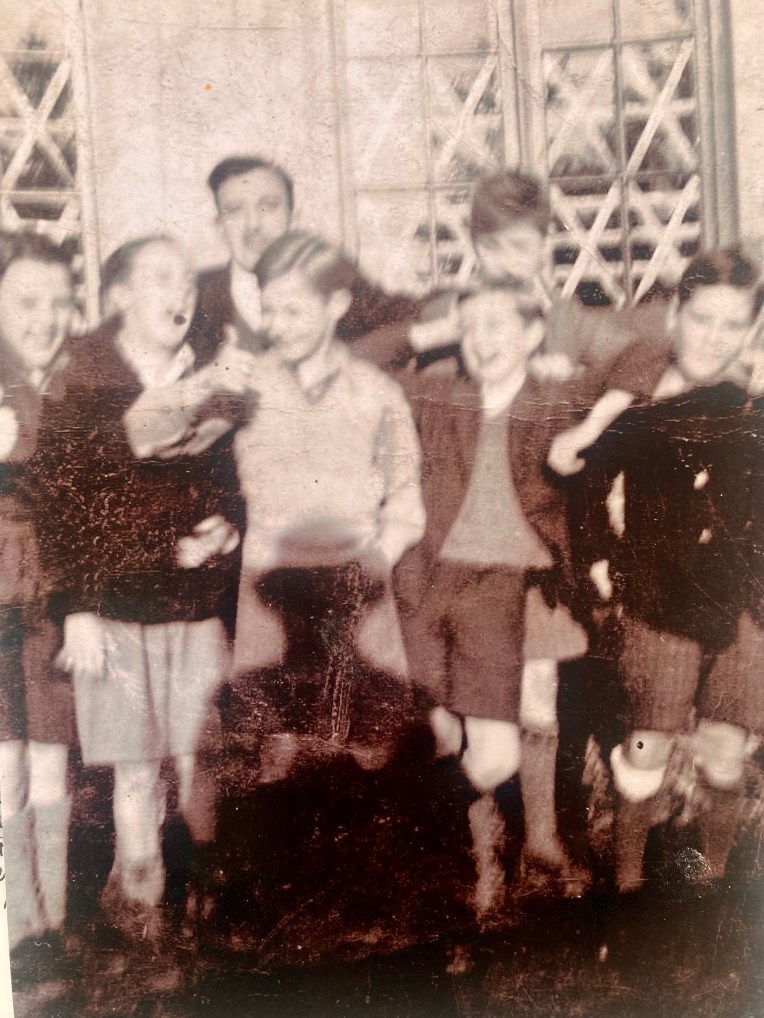
Ken’s Story…
Originally submitted to the BBC’s People’s War archive, Ken Clark recalls life in two very different billets: first with a kindly tailor and his wife above a shop in Oxted, then with a well-off family in Limpsfield, where daily life echoed with the sounds of church music and the distant drone of wartime dogfights overhead. From cycling unaccompanied across signpost-less countryside to witnessing Dunkirk survivors pass through the village, Ken’s story offers a unique window into the resilience, adaptability, and surprising joys of wartime evacuation…
“We all have experience of the most memorable day in our lives — all relating to different events, with brief or lifetime affects. But for most of us aged 70 or thereabouts, there is one most memorable day that we share with thousands of others: the 1st of September 1939, when the great evacuation of school children from our cities began because of the imminence of the war with Germany.
Documentaries on this subject tend to depict very young children, some tearful, climbing onto trains. But of course just as many schoolboys and girls the 12-18 age group were evacuated, and I want to write here of the experience of one boy of that age. In fact I was 12 ½ and beginning my second year at my south London grammar school [Aske’s in New Cross]. The first intimation of the threat of war was the installation in our small back garden of an Anderson shelter in the spring of 1939 (a large one because there were six in our family).
We attended school every day at the end of August with a packed case and gas masks slung over our shoulders. There was a tense atmosphere, a mixture of anxiety and excitement, so that it was a relief when the order came to move.
We marched downhill to Brockley station, not knowing where in the whole of England we might be going, nor how long we would be away — actually most of us would never return to our London school. We went in a special train to Caterham in Surrey and from there by coaches to Oxted, a small town built round the railway station below the North Downs.
We were deposited at Oxted’s County School and then marched down the high street where I and another boy, unknown to me were delivered to a tailor’s little shop — it was not until later I realised how chance influences one’s happiness. The white haired tailor and his wife gave us a warm welcome and settled us in a small back bedroom (reached through their bedroom) with a view of Oxted’s gasworks.
It was a strange atmosphere for two days — we might go home again if there was no war. But war was declared on the 3rd of September and we had to get used to a strange life. To begin with we shared the Oxted School, doing only part time lessons. We sent for our bicycles and this is when our exploration of Surrey began. We cycled to Redhill to swim, to Westerham, to Edenbridge and I eventually cycled alone to Tunbridge wells, without a map and with no sign posts (they had been removed), to visit my sister.
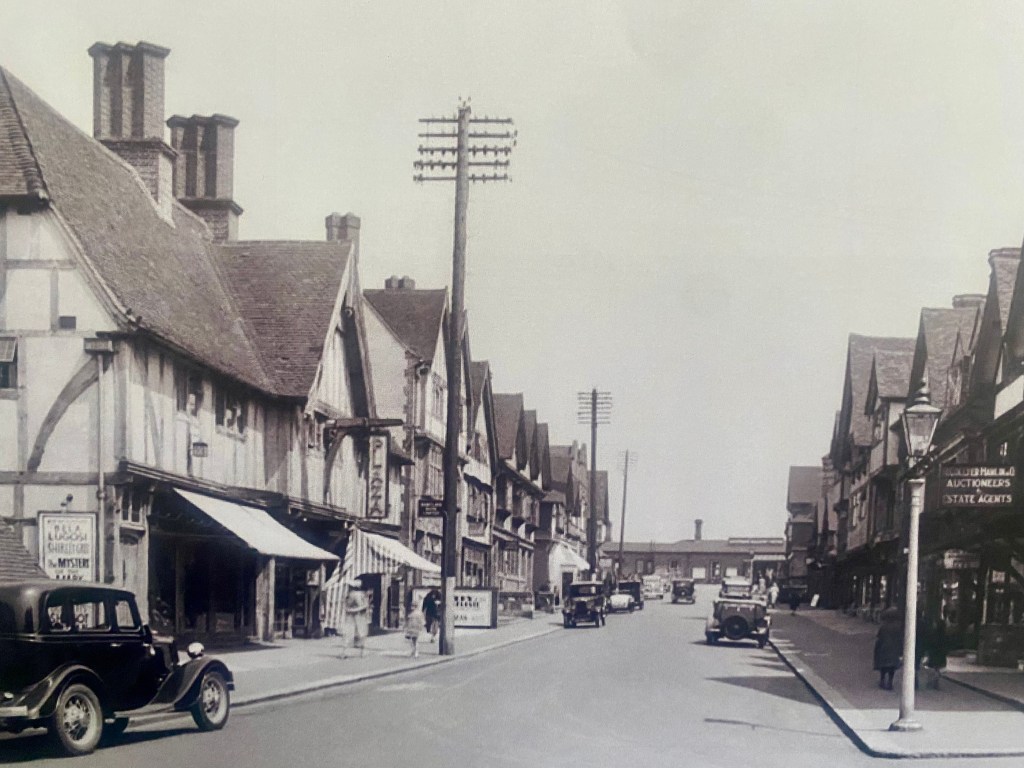
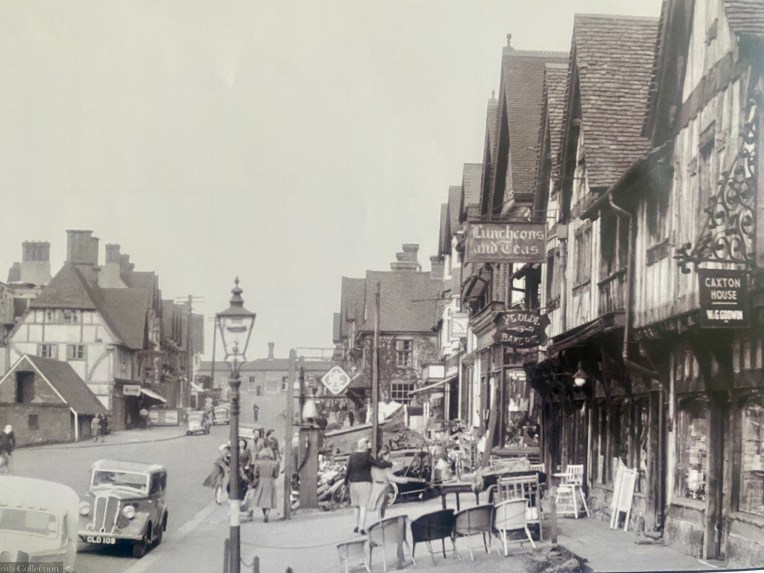
The tailor was straight from Dickens. He sat cross-legged (his legs were unusually short) on a bench in his workroom in the back garden — he was always ready to talk while sewing and I liked him straight away.
But the shortcomings of the house were soon apparent. There was no bathroom and only an outside loo and the food was not very good (except for fruit puddings). After some months we were found another billet. There was no bad feeling, but the tailor, like other poorer folk who were moved to take us in by the threat of war found the billeting allowance of 50p for one boy and less than 100p for two per week was not enough.
My next home could not have been more different. It was with a well off family in a large house in the shade of Limpsfield’s little church [St Peter’s], with only fields and woods between it and the North Downs. I shared an attic bedroom with another boy and we had the use of the ‘day nursery’ to do our homework in the evenings. There was one servant and a nanny to look after two small daughters. It was a happy family but an odd existence, because at the weekends we had meals with the family waited on by the maid and in the week our ‘high teas’.
Our host and hostess both played the church organ and one of my tense but happy memories is my duty to ‘turn over’ the music for special recitals. I kept in touch with the lady of the house until last year, when she died at over 90.
Although we enjoyed the countryside, we did witness the white faced Dunkirk soldiers being driven by and the Battle of Britain took place over our heads. I must say we enjoyed the aerial dogfights, with a boyish disregard of any deaths involved.
Our schooling improved when we acquired a huge mansion which became our school [Champions], and three other houses which became hostels for about half of the boys. With a housemaster, blacked out evenings in the winters and no televisions or radios, homework had no competition. Our examination results were better than in peace time.
In 1939 I looked up at the North Downs and wondered how far from home we were. By 1941 some of us would start off at 6 o’clock on Sunday mornings and cycle over the Downs and on to reach London in time for breakfast!
But peace came at last and many of us (including myself) were called up for National Service for three years. In 1989 we had a special meeting of the Old Boys’ Association to celebrate the 50th anniversary of 1939. Over 80 attended, grey haired grandfathers by then, and it was heartening to see how many of the old Oxted men stood together. Wartime evacuation had not been without its troubles, but the friendships made then have endured.”
The People’s War site [now archived] is by BBC Radio Merseyside’s People’s War team. The BBC asked the public to contribute their memories of World War Two to a website between June 2003 and January 2006. This archive of 47,000 stories and 15,000 images is the result. https://www.bbc.co.uk/history/ww2peopleswar
There will be a small display of wartime memories in our K6 phone box opposite St Peter’s School as well as an exhibition in Oxted Library from Thursday 8th May, VE Day 80th anniversary. Please take some time to have a look and remember those who fought in, and lived through WW2.
Discover more from Limpsfield, Surrey
Subscribe to get the latest posts sent to your email.
