The Limpsfield Blog

The Roman Invasion of Crockham Hill & Limpsfield Chart!

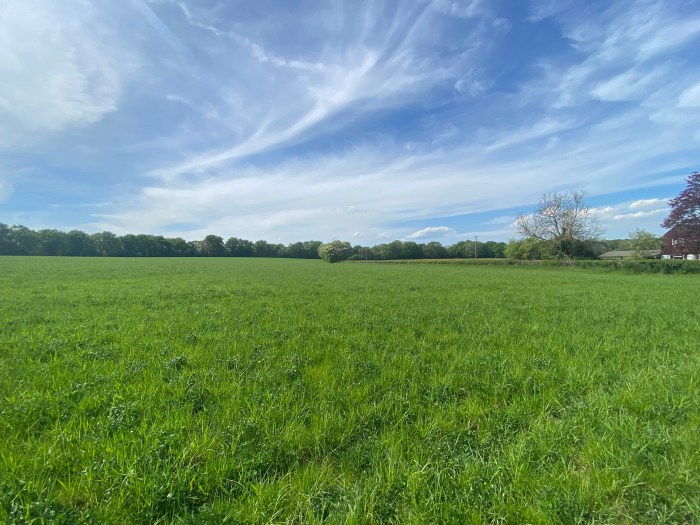
In another delightful guest article, Richard Stilgoe recounts his unexpected journey into Roman history while undertaking a personal project to dig a lake at Trevereux Manor.

What began as a modern landscaping venture soon uncovered remnants of ancient Roman life, including a paved staging area believed to be used for changing horses—described humorously as the Roman equivalent of Clacket Lane Services.

With help from archaeologists and later a pair of enthusiastic detectorists, Dom and Matt, Stilgoe’s field yielded a surprising haul of Roman artefacts, from coins to a striking Hermes figurine.

Blending wit with historical insight, he brings to life the enduring legacy of Rome in the fields of Trevereux—and the very human stories buried beneath our feet…

Continue reading “The Roman Invasion of Crockham Hill & Limpsfield Chart!”
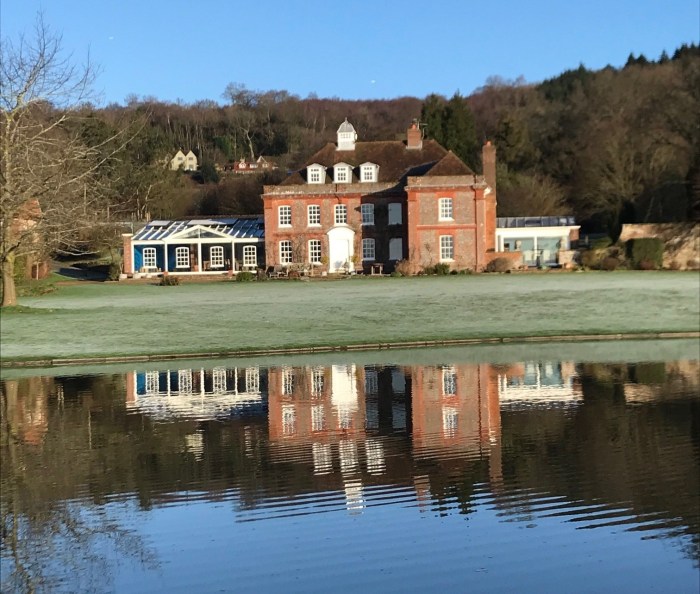
Trevereux Manor, Limpsfield, courtesy of Richard Stilgoe

Trevereux – the House They Cannot Spell

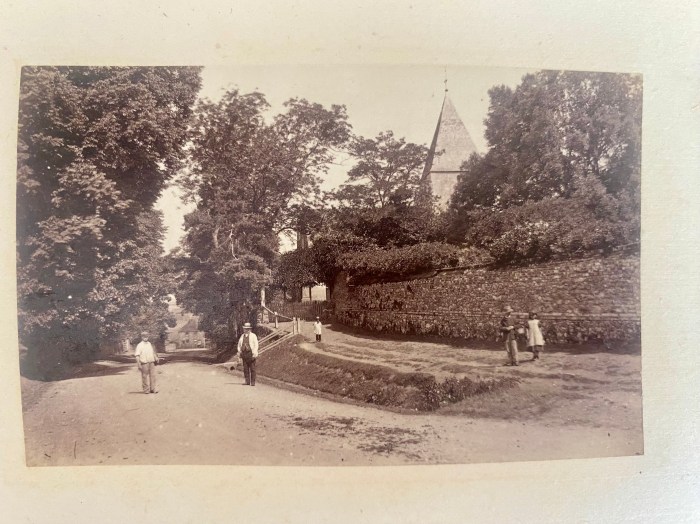
Following on from our article on Mary Emma Cox’s Victorian Photo Album, in this brilliant guest article, Limpsfield Chart resident and national treasure, Richard Stilgoe traces the colourful and often chaotic history of Trevereux Manor—the grand old house whose name has baffled spellers for centuries.

Eschewing a dry account of architectural changes, Stilgoe focuses on the people who shaped its story, from Roman settlers and medieval knights to Jane Austen-style romances and fifties pop stars. Through tales of wartime sieges, thunderstorm courtships, and Rolls-Royce rebuilds, we meet a cast as diverse as the house’s many spellings. With warmth and wit, Stilgoe takes us from the Manor’s earliest days to its near-destruction in a dramatic 1989 fire, and finally to its loving restoration by his own family—proof that while the spelling of Trevereux may remain tricky, its charm is undebatable.

Continue reading “Trevereux – the House They Cannot Spell”
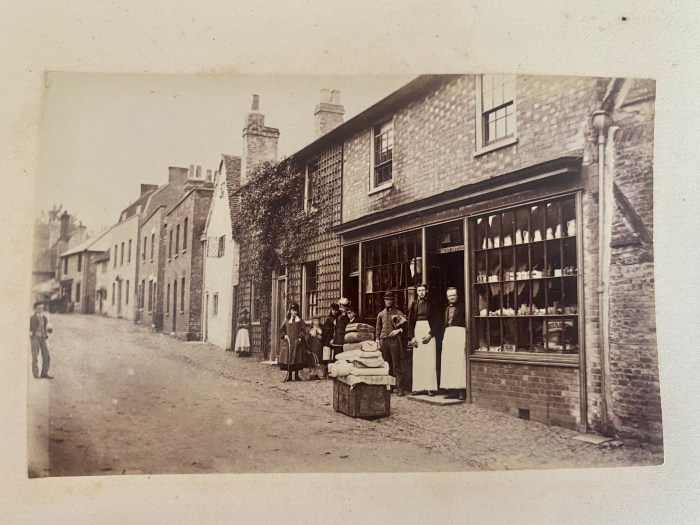
Post Office Limpsfield

A Victorian Photo Album and the Goldsworthy Legacy in Limpsfield

A year or so ago, I received a call from a lovely lady named Helen Goldsworthy from Farningham in Kent. Helen had been sorting through the belongings of her late husband, Malcolm Goldsworthy, when she discovered a remarkable treasure—a book of photographs capturing Limpsfield and the surrounding areas in the late 1800s.

Continue reading “A Victorian Photo Album and the Goldsworthy Legacy in Limpsfield”

Farming for the Future: How Local Farmers like Simon Chiles Are Safeguarding the Land and Wildlife of Limpsfield

In the picturesque countryside that spans the Limpsfield and Edenbridge border, one name stands out in the agricultural world: Simon Chiles. A veteran farmer and agricultural contractor, Simon has lived in the farmland area of Limpsfield his entire life and has quietly become a linchpin of the local farming community, managing operations on numerous farms across the Surrey and Kent border area. 

With more than five decades of experience under his belt, he offers not only a wealth of knowledge about the land but also a vision for its future—one that balances productivity with preservation. 

Farming today stands at a crossroads. Rising costs, unpredictable weather, and shifting government policies have made it increasingly difficult for farmers to plan for the future. Since Brexit, the phasing out of EU subsidies and the slow rollout of new Environmental Land Management schemes have created uncertainty across the industry. At the same time, farmers are being asked to do more than ever — not just to produce food, but to help tackle climate change, restore biodiversity, and manage the landscape for future generations.

In this challenging context, farmers like Simon are quietly getting on with the job — drawing on decades of experience to adapt, innovate, and care for the land. While policymakers debate priorities and public attention shifts, it’s farmers on the ground who understand the daily realities of agriculture. In our conversation below, Simon provides insight into the pressures facing British farming today — and why supporting those who work the land has never mattered more…

Continue reading “Farming for the Future: How Local Farmers like Simon Chiles Are Safeguarding the Land and Wildlife of Limpsfield”
National Trust and Woodland Management on Limpsfield Common

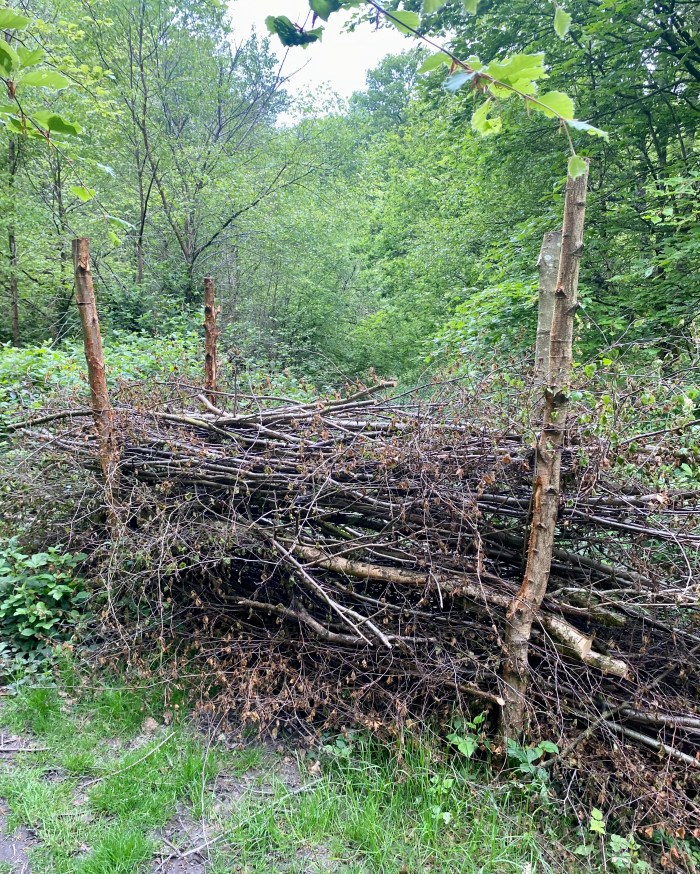
Woodland Management for the future health of Limpsfield Common and The High Chart

At the Heart of It All: A Wartime Childhood in Limpsfield Chart

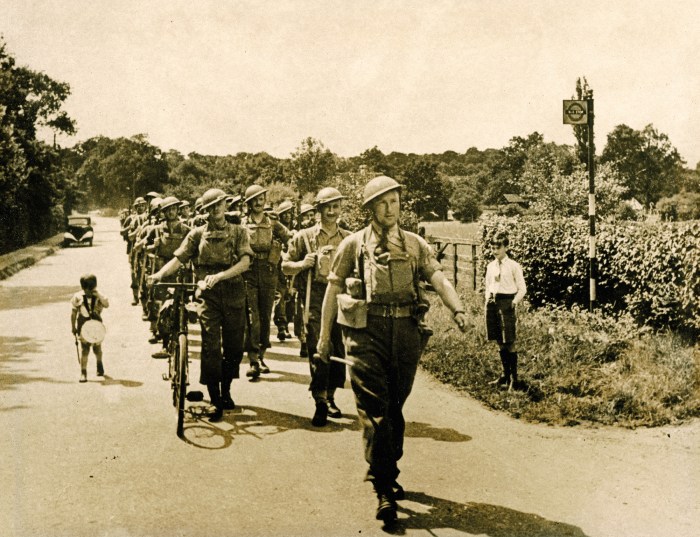
This personal wartime memoir by Robert Douglas Peckett, originally shared as part of the BBC’s People’s War project, offers a unique and vivid insight into life in Limpsfield Chart, a small village nestled under the North Downs on the Surrey–Kent border. Though remote and rural, the village found itself at the heart of the war effort due to its strategic position directly in line with France, London, and key RAF airfields such as Biggin Hill, Redhill, and Kenley.

Robert’s recollections paint a detailed picture of wartime Britain from the eyes of a child—where barrage balloons hovered above the village common, German and Italian POW camps lay hidden in nearby woods, and military convoys rumbled past on their way to Dover. With local dignitaries like Prime Minister Winston Churchill and Field Marshal Viscount Slim living nearby, and the skies filled with Hurricanes and Mustangs, Limpsfield Chart was anything but a quiet backwater.

This account brings to life not just the dangers and disruption of war, but also the remarkable resilience, curiosity, and community spirit that defined the Home Front—complete with air raid shelters, Home Guard rifle ranges, and an unforgettable VE Day parade led by a Canadian pipe and drum band. It is a heartfelt and valuable window into how global conflict shaped even the most rural corners of Britain.

Continue reading “At the Heart of It All: A Wartime Childhood in Limpsfield Chart”

Growing Up Under Fire: A Wartime Childhood in surrey

This vivid personal account of wartime life in the Limpsfield and Oxted area was written by Hazel Stewart and shared online by Charlotte Gill on behalf of The Dingemans Centre in Steyning. Hazel grew up in Hurst Green, with family in Oxted and Limpsfield—an area that, during the Second World War, was close to key strategic sites such as Biggin Hill and Kenley Airfields.

Her memories provide a moving and detailed glimpse into life on the Home Front: from watching dogfights overhead during the Battle of Britain to sheltering from bombing raids, carrying gas masks to school, and knitting for the war effort. Hazel’s story reflects the strength, adaptability, and community spirit that defined civilian life during the war years in this part of the country.

Continue reading “Growing Up Under Fire: A Wartime Childhood in surrey”

A Boy’s War: Two Evacuees’ Memories of Oxted & Limpsfield

Did you know that entire schools were evacuated from London to Oxted during the Second World War and Limpsfield Common was used for tank training exercises ahead of the D-Day landings?

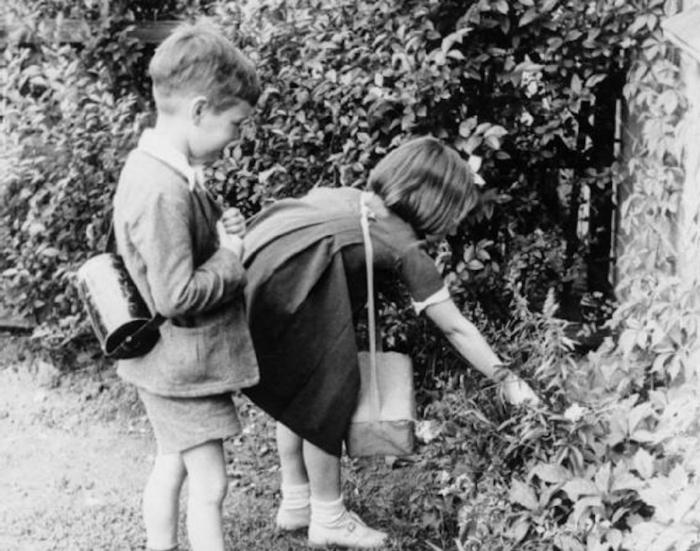
When war loomed in 1939, thousands of children were evacuated from cities to the relative safety of the countryside—a moment etched in the memory of a generation. For Anthony Collins and Ken Clark, the first of September marked the beginning of a journey that would take them from south London to the quiet lanes of Oxted and Limpsfield in Surrey. Unlike the often-portrayed tearful toddlers with name tags, Ken and Anthony were part of the lesser-remembered wave of older schoolchildren—independent, observant, and full of curiosity.

In the run up to VE Day, 8 May and Surrey Day on 10 May, we’ll be running some fascinating accounts that depict life in wartime Oxted & Limpsfield… We hope you enjoy them.

Continue reading “A Boy’s War: Two Evacuees’ Memories of Oxted & Limpsfield”

Salvage and Secrecy: Everyday Contributions to Britain’s War Effort

During the Second World War, civilians across Britain played a vital role in supporting the war effort through ingenuity, cooperation, and sacrifice. Government campaigns encouraged people to collect and donate everyday items—many of which had surprisingly important military uses.

Continue reading “Salvage and Secrecy: Everyday Contributions to Britain’s War Effort”

Nursing on the Frontline: Wartime Memories from Oxted & Limpsfield Cottage Hospital

On August 18th, 1940—later known as The Hardest Day of the Battle of Britain—17-year-old probationer nurse J.H. Allen (née Banks) was just 18 days into her first posting at Oxted and Limpsfield Cottage Hospital when the sky above Surrey erupted into combat. She watched as a German Dornier and a British Hurricane clashed overhead, their fates sealed above Titsey Hill and Hurst Green. What followed was a vivid baptism into wartime nursing that would shape her early adult life and remain etched in memory forever.

In this deeply personal and richly detailed account, Allen recalls the extraordinary experiences of nursing during one of Britain’s most perilous times—treating Dunkirk survivors, civilian air raid casualties, and even a captured German pilot who offered her his Iron Cross and a chilling warning of gas attacks to come. Life at the hospital, nestled at the foot of the North Downs, brought moments of quiet heroism, close calls during bombing raids, and even a chance encounter with King George VI as he reviewed troops before their departure.

Continue reading “Nursing on the Frontline: Wartime Memories from Oxted & Limpsfield Cottage Hospital”