The Big Butterfly Count begins on Friday 18th July 2025 and will run until Sunday 10th August. It is a crucial in helping scientists monitor the butterfly population in the UK and around the world. This is a great end of term activity for schools and equally for children and families on school holidays. Read on to find out what it’s all about and how to take part…
Why are butterflies so important?
Butterflies are crucial to our ecosystem. As pollinators, along with moths, bees and hoverflies, they need sources of nectar and pollen to thrive. As they travel from flower to flower, they also pollinate them, enabling them to set seed or bear fruit.
Sadly for the first time since monitoring began, in 2024 more than half of butterfly species (31 out of 59) were declared to be in long-term decline, with nine species having their worst recorded year, including Small Tortoiseshell, Chalk Hill Blue and Small Copper. This is seriously concerning for butterflies and biodiversity / our ecosystem in general.
How to take part in the Big Butterfly Count
Choose a place to spot butterflies and moths (your garden, school garden, Limpsfield Common, Chart Woods). Watch for 15 minutes. Then record which species you see.
Step 1.
Get ready
Download the handy butterfly ID chart (below) or free app for iOS and Android to identify and record the butterflies you spot.
Step 2.
Join in
Between Friday 18th July and Sunday 10th August choose a place to spot butterflies and moths. Watch for 15 minutes. Then record which species you see in step 3.
Step 3.
Add your counts: https://bigbutterflycount.butterfly-conservation.org/map
The Big Butterfly Count 2025 is now open, ready for the main event between 18th July and 10th August. Add your counts on the website or via the app, and look at the fascinating interactive map to see how your data is contributing to conservation science and research.
Thank you, the butterflies appreciate it!
Download the identifier and find more on the Butterfly Conservation Society’s website here: https://butterfly-conservation.org/butterflies/identify-a-butterfly
How you can help butterflies to thrive
- Create a butterfly friendly garden – Butterflies love all sorts of flowers and plants – buttercups, brambles, wood anemone and honeysuckle in woodland, gorse and heather on the heathland, and pretty much every kind of flowering plant in your garden from asters to lavender to raspberries and sunflowers and everything in between.
- Make sure there is water out for them in a shallow bowl with stones in so they can perch and sip without drowning
- Leave wild spaces in your garden (particularly in spring and early summer months)
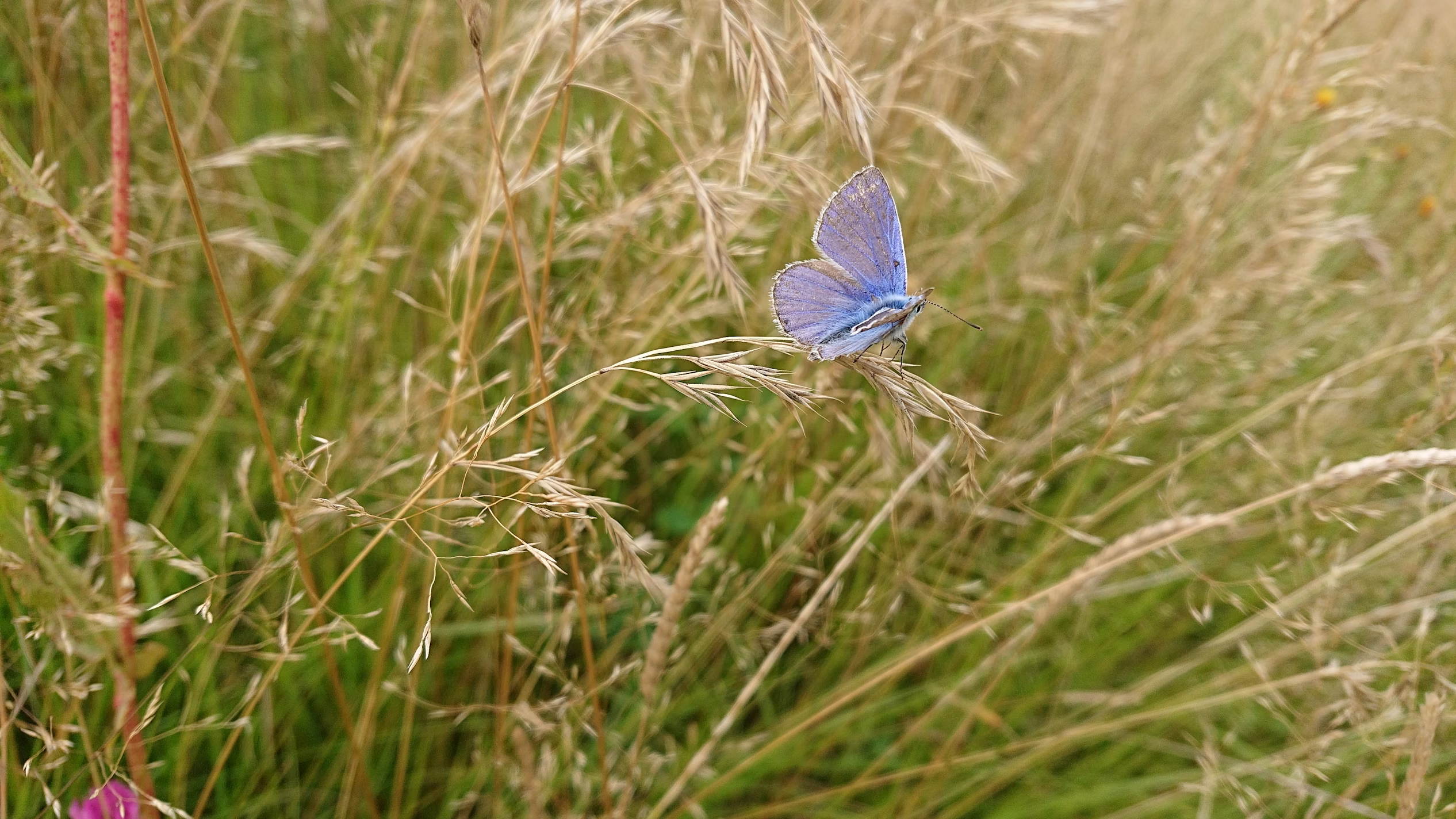


Fun Facts About Butterflies…
- Butterflies taste with their feet
- A group of butterflies is sometimes called a “flutter”
- Butterflies can see colour – their eyes are made of 6,000 lenses and can see ultraviolet light
- Butterflies have four wings
- Butterfly wings are transparent – the colours and patterns we see are made by the reflection of the tiny scales covering them
- Butterflies are easy prey (not so fun!)
- Some butterflies are carnivores
- Butterflies are cold-blooded insects
- Butterflies use up all they eat for energy and often never poop or wee!
- Butterflies have a liquid diet
- The process by which a caterpillar magically transforms into a butterfly – metamorphosis – is completed in 10 to 15 days, depending on the species
- On average, most butterflies will live for up to 2-4 weeks if the conditions are good – some species only live for a few days, other for a few weeks, while several butterfly species can live up to a couple of months
#BigButterflyCount2025
Discover more from Limpsfield, Surrey
Subscribe to get the latest posts sent to your email.
