As spring arrives in the UK, so does the start of bee swarming season—a natural and fascinating part of a honeybee colony’s lifecycle. If you spot a large cluster of buzzing bees in your garden, on a tree, or even on a lamppost, don’t panic. Here’s what you need to know…
What is a Bee Swarm?
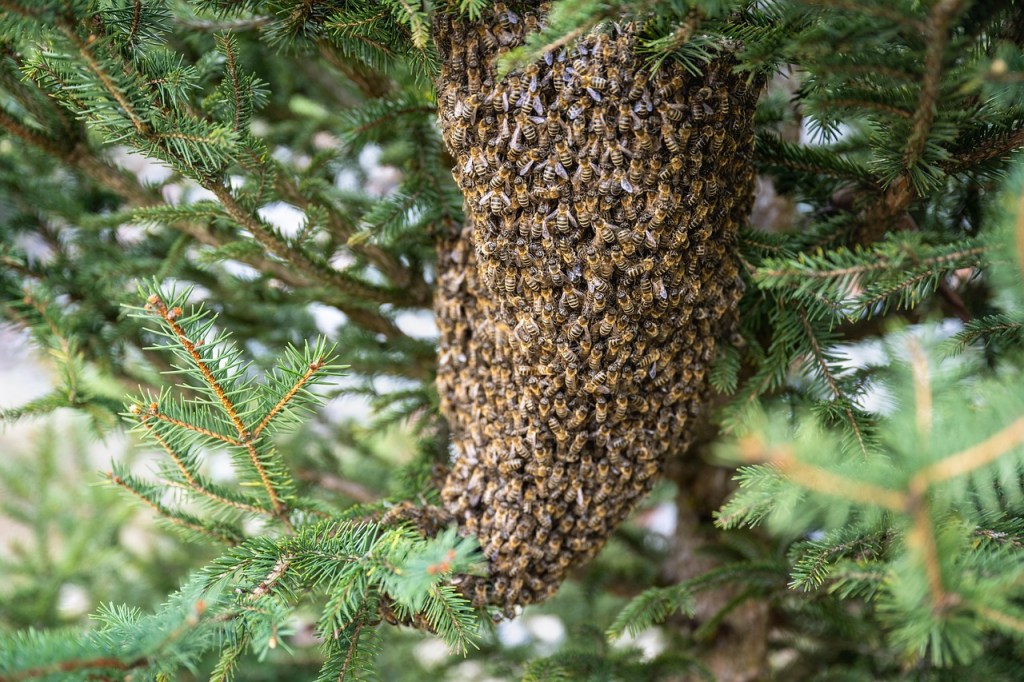
Swarming is how honeybee colonies reproduce. When a hive becomes too crowded, the old queen and about half the worker bees leave to find a new home. They often stop and cluster in a temporary spot—on branches, fences, or even cars—while scout bees search for a permanent nest.
Are They Dangerous?
Despite the dramatic sight (and sound), swarming bees are usually quite docile. They’re focused on protecting their queen and finding a new home—not on stinging. Still, it’s best to keep children and pets at a distance and avoid disturbing the swarm.
Should They Be Moved?
In many cases, swarms move on within a day or two. However, if the swarm is in a high-traffic area or is at risk of being harmed, it’s worth calling a local beekeeper. Many beekeepers are happy to collect swarms free of charge and will safely rehome them.
You can find swarm collectors in your area via the British Beekeepers Association (BBKA) website: www.bbka.org.uk/swarm. Our nearest Bee Keeper Association is the Westerham Beekeepers. Their advice: “Once you are sure you are dealing with a swarm of honeybees, you should leave the bees alone and contact our swarm co-ordinator, Alban Smith Brindle on 07919 843546 (South Godstone), or the nearest contact from the BBKA website if Alban is not available.” Mark Edwards is another local beekeeper / swarm collector: 07540 785733 (Westerham)
What About Bumblebees?
Unlike honeybees, bumblebees don’t swarm. They nest in much smaller groups—often in hidden, cosy places like compost heaps, walls, under sheds, in old rodent burrows, or even bird boxes. Bumblebee nests are usually temporary and only last a few months. Unless they’re causing a specific problem, it’s best to leave them be. Bumblebees are gentle, generally non-aggressive, and vital pollinators in gardens and wild spaces alike.
If you’re ever unsure about what kind of bee you’re seeing—or whether action is needed—you can contact a local beekeeper or visit the Bumblebee Conservation Trust at www.bumblebeeconservation.org.
A Buzz-Worthy Reminder
Bees are vital pollinators and an important part of our local ecosystem. By treating swarms with care and curiosity rather than fear, we help support their survival.
So next time you spot a bee swarm, don’t reach for the bug spray—reach for your phone and call a local expert!
In Limpsfield, Steve Goodsall of A Wasp Removal has been dealing with bees, wasps and hornets for over 40 years and can advise on whether you have a wasp or a bee issue and what to do about it. email: awaspcontroloxted@gmail.com. Telephone: 07860 109979 or 01883 715027.
Discover more from Limpsfield, Surrey
Subscribe to get the latest posts sent to your email.
